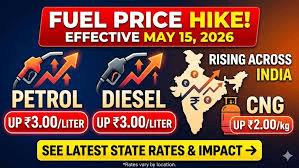
Fuel prices across India have increased again, affecting millions of consumers and businesses. Petrol and diesel rates saw a noticeable rise in several major cities including Delhi, Mumbai, Chennai, and Kolkata. The increase comes amid rising global crude oil prices and fluctuations in the international energy market. Many people are now worried about the growing cost of transportation and daily living expenses.
Global Crude Oil Prices Impact Indian Market
One of the biggest reasons behind the fuel price hike is the increase in global crude oil prices. International tensions, supply chain disruptions, and production cuts by oil-producing countries have pushed crude oil prices upward. Since India imports a large portion of its crude oil requirements, any rise in global prices directly affects domestic fuel rates. Oil marketing companies adjust prices based on international market trends, currency exchange rates, and import costs.
Transportation Costs Expected to Increase
The rise in petrol and diesel prices is expected to increase transportation expenses across the country. Truck operators, taxi drivers, and delivery services may increase their charges to manage higher fuel costs. This could eventually make goods and services more expensive for consumers. Industries that depend heavily on transportation, including agriculture, retail, and logistics, may also feel financial pressure due to the higher operating costs.
Common Citizens Feeling the Pressure
Middle-class families and daily commuters are among the most affected by the fuel price increase. People who travel long distances for work or business are now spending more on fuel every month. Many consumers are also worried that rising fuel prices may lead to inflation in food products and essential goods. Public discussions on social media show growing concern about the impact on household budgets and savings.
Government Monitoring the Situation
The Indian government is closely monitoring the fuel price situation and global oil market conditions. Experts believe that tax adjustments or policy measures could help provide relief if prices continue to rise sharply. However, officials also emphasize the importance of maintaining economic stability and balancing revenue needs. Energy analysts suggest that future fuel prices will depend largely on global crude oil supply and geopolitical developments.
Electric Vehicles Gain More Attention
As fuel prices continue to rise, interest in electric vehicles is also growing rapidly in India. Many consumers are considering switching to EVs to reduce long-term fuel expenses. Automobile companies are expanding their electric vehicle lineup, while the government continues promoting clean energy transportation. Rising fuel prices may further accelerate India’s transition toward electric mobility in the coming years.
Experts Advise Smart Fuel Management
Financial experts recommend that consumers adopt fuel-saving habits to manage rising expenses. Using public transport, carpooling, regular vehicle maintenance, and efficient driving can help reduce fuel consumption. Businesses are also exploring alternative energy solutions and cost-cutting strategies to handle increasing transportation expenses. Analysts believe careful planning will be essential if fuel prices remain high in the coming months.