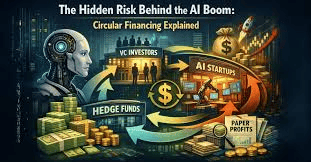
Artificial Intelligence (AI) is becoming one of the biggest drivers of global economic growth. Governments, technology companies, banks, and startups are investing billions of dollars into AI development. From automation tools to advanced chatbots and data analysis systems, AI is transforming industries at an unprecedented speed. However, experts are now warning that the AI boom may also create new financial risks for markets and economies worldwide.
Rising Valuations in Technology Stocks
One major concern is the rapid rise in technology stock valuations. Companies associated with AI are witnessing huge increases in share prices, even when their profits remain limited. Investors fear that excessive excitement around AI could create a market bubble similar to the dot-com crash of the early 2000s. If expectations fail to match actual earnings, stock markets could face sudden corrections and heavy losses.
Heavy Spending by Companies
Large corporations are spending massive amounts on AI infrastructure, including advanced chips, cloud computing systems, and data centers. While these investments may generate future growth, they also increase financial pressure on businesses. Companies borrowing heavily to fund AI projects could face debt-related problems if profits do not grow as expected. Analysts believe that uncontrolled spending may weaken balance sheets in the long term.
Banks Monitoring AI-Linked Risks
Financial institutions and central banks are closely monitoring AI-related risks. Regulators worry that AI systems used in trading and lending could increase market volatility. Automated trading programs powered by AI may react rapidly to market events, causing sudden price swings. At the same time, errors in AI-based credit assessments could create problems in the banking sector if loans are approved without proper evaluation.
Cybersecurity and Fraud Concerns
The rapid growth of AI is also increasing cybersecurity risks. Fraudsters are using AI tools to create fake voices, realistic videos, and advanced online scams. Financial institutions may face higher losses due to digital fraud and identity theft. Experts warn that cyberattacks powered by AI could become more sophisticated and difficult to detect, creating major challenges for banks and businesses.
Job Displacement and Economic Impact
AI automation is expected to replace certain jobs across industries such as customer service, manufacturing, and data processing. While AI may create new employment opportunities, large-scale job displacement could reduce consumer spending and increase economic inequality. Economists believe governments must focus on skill development and workforce training to reduce the social and financial impact of automation.
Global Competition Intensifying
Countries around the world are competing to become leaders in AI technology. The United States, China, India, and European nations are increasing investments in research and innovation. However, this race may also create geopolitical and economic tensions. Restrictions on semiconductor exports, technology access, and AI regulations could disrupt global supply chains and affect international markets.
Need for Strong Regulations
Experts believe clear regulations are necessary to manage AI-related financial risks. Governments are discussing rules related to data privacy, ethical AI usage, and transparency in automated systems. Financial regulators are also exploring ways to supervise AI-driven trading platforms and lending systems. Balanced regulations could help maintain innovation while protecting economies from instability.
Opportunities Still Remain Strong
Despite the risks, AI continues to offer enormous opportunities for businesses and economies. AI can improve productivity, reduce operational costs, and accelerate innovation in sectors such as healthcare, education, finance, and transportation. Many analysts believe the technology will remain a key driver of future economic growth if risks are managed carefully.
Conclusion
The global AI boom is reshaping industries and financial markets at a rapid pace. While the technology promises major economic benefits, it also brings new challenges related to market bubbles, debt, cybersecurity, and job displacement. Policymakers, businesses, and financial institutions must work together to ensure that AI growth remains sustainable and does not create long-term economic instability.